
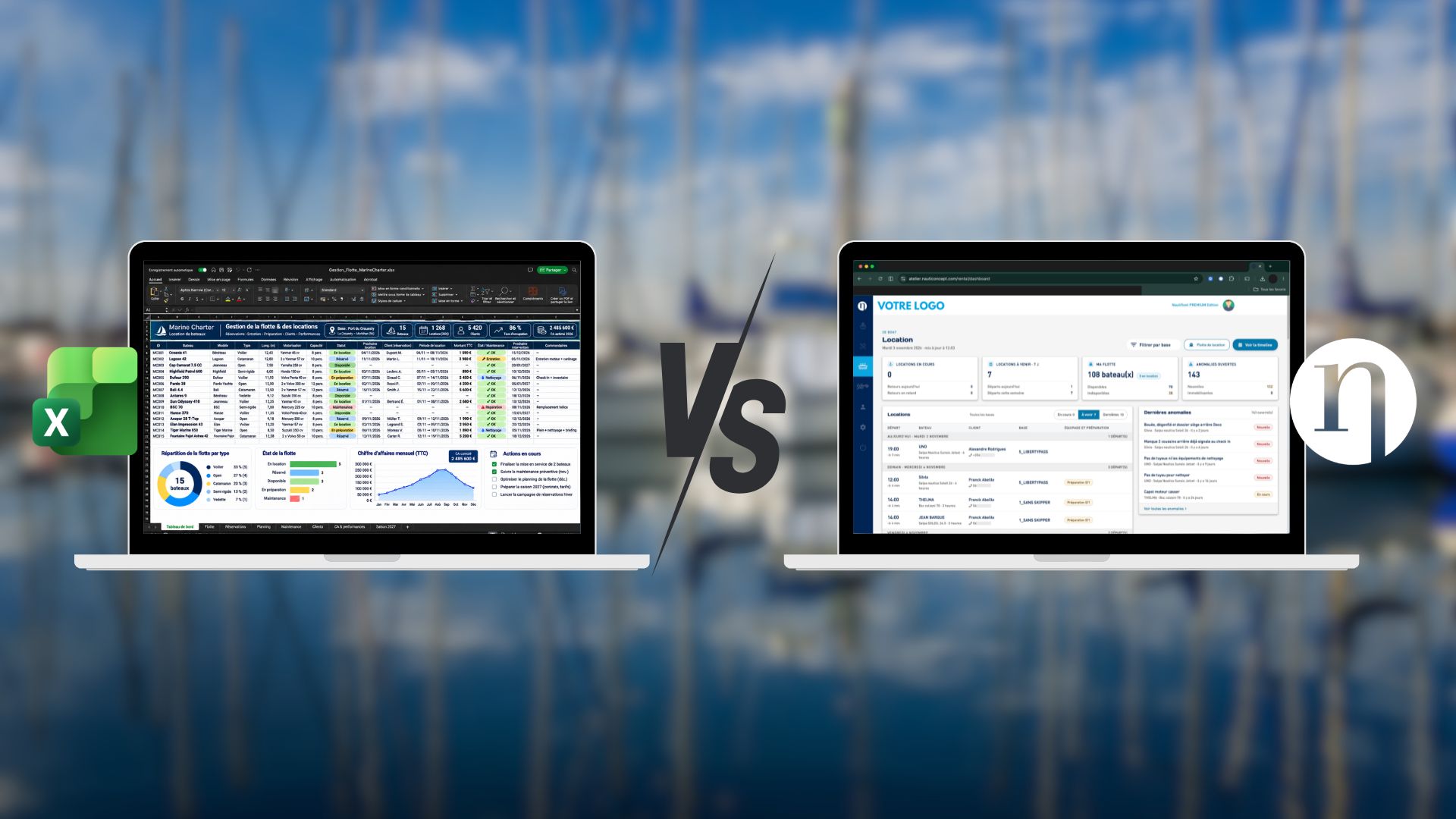
If you run a boatyard, there’s a good chance Excel is part of your daily routine.
You might use it to schedule maintenance, track ongoing jobs, organize your technicians’ workload or keep records of the boats you’re servicing.
And for good reason. Excel is familiar, flexible and relatively easy to set up.
But as your workload increases, keeping everything organized can become more complicated.
One of your technicians needs to know when an engine was last serviced. A boat owner calls to check whether their boat will be ready for launch. Another repair is waiting for approval, while several boats are scheduled for maintenance before the weekend.
The information is probably there. Somewhere between your spreadsheets, emails, job sheets and phone conversations.
The question is: how much time does your team spend finding and updating information instead of getting the work done?
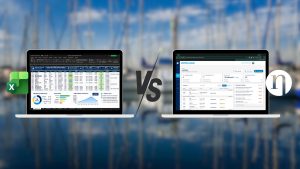
Let’s look at what Excel does well, where it can become limiting and when dedicated boatyard management software might make your job easier.
Why Excel still works for many boatyards
If you’re managing a relatively small number of boats and maintenance jobs, Excel may be all you need.
You can create maintenance schedules, list upcoming jobs, record customer information and keep track of completed work without investing in a specialized system.
There are some good reasons to keep using it:
- It’s familiar. Your team probably already knows how to use it.
- It’s flexible. You can create your own tables and adapt them to your way of working.
- It’s affordable. You may already have access to it through your existing software.
- It’s quick to set up. You don’t need a lengthy implementation process to start tracking jobs.
You might have one spreadsheet for annual engine servicing, another for winterization and another for jobs currently in progress.
If your team is small and everyone knows where to find the information, this approach can work perfectly well.
The difficulty usually starts when more boats, technicians and jobs need to be coordinated.
Excel can store a lot of information, but keeping that information accurate, accessible and up to date often depends on someone doing the work manually.
And when your team is busy, that’s not always easy.
Five Signs Your Boatyard May Have Outgrown Excel
You don’t need to be managing hundreds of boats to experience difficulties with spreadsheets.
Even a relatively small boatyard can run into problems when several technicians are working on different boats and information is spread across multiple files.
Here are five situations you might recognize.
- You’re constantly searching for maintenance information
A customer calls your workshop:
« When was my engine last serviced? »
You know the work was carried out. But was it recorded in your maintenance spreadsheet? Is the service report saved in a folder? Did the technician add a note somewhere?
You spend several minutes looking for information that should be easy to find.
Now imagine this happening several times a day.
When each boat has a centralized service history, your team can find previous repairs, maintenance records, photographs and technical information without searching through different files.
- Keeping track of your technicians’ work is getting complicated
Picture a typical busy morning in your yard.
One technician is carrying out an engine service. Another is working on an electrical fault. Two more are preparing boats for launch.
Meanwhile, a customer calls about an additional repair, and another boat arrives with an unexpected problem.
You need to know:
- Which jobs are currently in progress?
- Who is working on each boat?
- Which tasks have been completed?
- What’s still waiting for parts or customer approval?
- Which boats will be ready on schedule?
You can track this information in Excel, but it requires regular updates and clear communication between your team members.
When everyone relies on separate files, messages or verbal updates, it’s easy to lose track of a job.
Dedicated maintenance software can give your team a shared view of ongoing work, making it easier to coordinate tasks and follow progress.
- Your customers’ service histories are scattered across different files
Every boat that comes into your yard has its own maintenance history.
Previous engine services, equipment replacements, recurring faults and repairs can all be important when planning the next job.
But what happens when the technician who carried out the previous service isn’t available?
Can another member of your team easily find out what was done?
If the answer involves searching through old invoices, emails and spreadsheets, you may be relying too heavily on individual employees’ knowledge.
Keeping a structured service history for each boat means your technicians can access previous work records, even when they weren’t involved in the original job.
- You’re waiting for boat owners to approve additional work
Your technician discovers a problem while servicing a boat.
The original job was straightforward, but an additional repair is now needed.
Before proceeding, you need the owner’s approval.
You call. No answer.
You send an email with photographs and an explanation of the problem.
The owner replies later, but the message doesn’t reach the technician immediately.
In the meantime, the boat is occupying space in your yard, and the job isn’t moving forward.
You can’t eliminate every delay, but you can make the approval process easier to manage.
Some marine maintenance platforms allow you to share technical findings, photographs and work requests directly with boat owners, who can then approve the proposed work remotely.
That way, your team has a clearer record of what’s been authorized and what is still awaiting approval.
- Maintenance planning is taking too much administrative time
Between annual servicing, winterization, antifouling, engine-hour-based maintenance and unexpected repairs, there’s always something to schedule.
Excel can help you keep track of upcoming work.
But who makes sure every maintenance date is updated? Who checks which services are overdue? Who reminds the team when a recurring task needs to be carried out?
If you’re manually checking several spreadsheets every week, there’s an opportunity to simplify the process.
Dedicated maintenance software can help you schedule recurring jobs, track upcoming service dates and organize preventive maintenance.
The aim isn’t to remove the human element from your workshop.
It’s to give your technicians more time to work on boats and spend less time managing information.
What Should You Look for in Marine Maintenance Software?
If you’re considering moving away from Excel, you don’t necessarily need a system that manages every aspect of your business.
Start by identifying where your team needs the most support.
Here are some useful features to consider.
A complete service history for every boat
You should be able to open a boat’s record and quickly find its previous maintenance work, technical information, photographs and relevant documents.
That means less time searching for information and a clearer picture of each boat’s condition and maintenance history.
Clear maintenance planning
Your team needs to know which jobs are coming up, which are overdue and which have already been completed.
Look for software that supports preventive maintenance schedules, recurring tasks and service intervals.
Better visibility of ongoing jobs
You should be able to see what’s happening across your yard without having to ask every technician for an update.
A shared system can help you track job progress and identify tasks that need attention.
Practical tools for your technicians
Your technicians shouldn’t have to return to the office every time they need information.
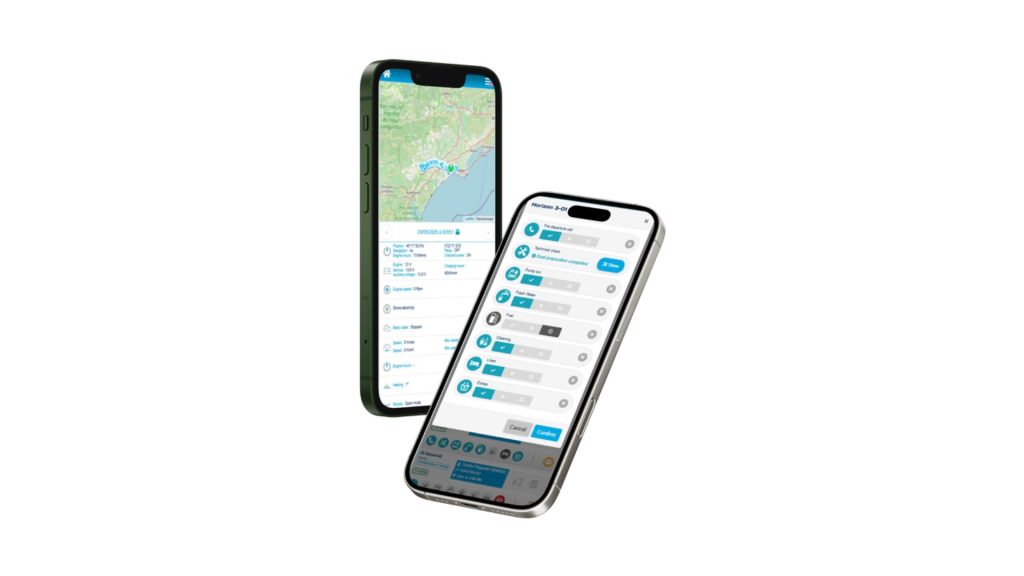
Check whether they can access maintenance records, instructions and checklists while working in the yard or on board.
Easier communication with boat owners
When additional work is required, you need a straightforward way to explain the issue and obtain approval.
Software that supports photographs, technical reports and remote owner approvals can help you keep these exchanges organized.
How NautiFleet Care Can Help Your Boatyard
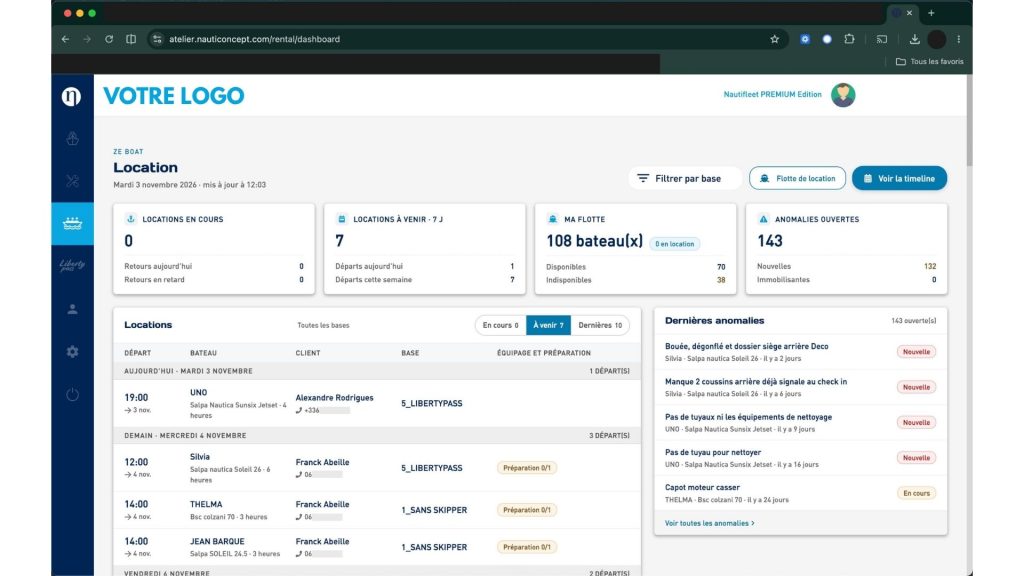
If you’re looking for a more structured way to manage maintenance, NautiFleet Care is designed specifically for marine professionals.
It helps you organize maintenance operations, centralize technical information and keep track of work carried out across multiple boats.
With NautiFleet Care, you can:
- Plan maintenance: Organize scheduled servicing, recurring tasks and upcoming maintenance operations.
- Track ongoing work: Follow interventions and monitor progress across your boats.
- Keep service records together: Access technical histories and information associated with each boat.
- Use digital checklists: Give your technicians structured procedures for recurring operations.
- Manage owner approvals: Share diagnoses and photographs, and allow boat owners to approve proposed work remotely.
- Access connected boat data: With compatible NauticSafe or Nano devices, use information such as engine hours, battery status and technical alerts to support maintenance monitoring.
The idea is straightforward: your team should be able to find the information it needs without searching through spreadsheets, emails and separate documents.
NautiFleet Care focuses on marine maintenance and technical operations, rather than replacing every administrative tool your boatyard uses.
Excel vs NautiFleet Care: a practical comparison
So, what actually changes when you move from spreadsheets to NautiFleet Care?
Here’s a summary of what each solution can offer your boatyard.
The biggest difference isn’t how much information you can store. It’s how easily your team can use that information throughout the working day.
A well-organized spreadsheet can be extremely useful.
But when you need to coordinate multiple jobs, technicians and customer requests, a system designed specifically for maintenance can make day-to-day operations easier.
Is it time for your boatyard to move beyond Excel?
If your current spreadsheets are well organized, your team can find the information it needs and your maintenance operations run smoothly, there may be no urgent reason to change.
But if you’re regularly searching for service records, chasing job updates or spending too much time coordinating information between technicians, it’s worth considering another approach.
You don’t need to wait until your boatyard becomes difficult to manage before improving the way you work.
The right maintenance software should help you stay organized as your business grows, without making your technicians’ jobs more complicated.
And ultimately, that’s what matters: spending less time managing information and more time getting boats serviced, repaired and ready to get back on the water.
Frequently Asked Questions
Can I use Excel to manage maintenance in my boatyard?
Yes. Excel can work well for a small team. However, as your workload increases, maintaining accurate information across multiple spreadsheets can become more time-consuming.
How do I know when my boatyard needs maintenance software?
Consider how much time your team spends finding information, updating records and coordinating jobs. If these tasks are becoming difficult to manage with spreadsheets, dedicated maintenance software may be worth exploring.
Can maintenance software help me manage several boats at once?
Yes. Depending on the platform, you can organize maintenance records by boat, track ongoing jobs, plan upcoming services and give your team access to shared technical information.
Do I need connected devices on every boat?
No. You can use maintenance management software without installing connected equipment on every boat. Compatible devices can provide additional information, such as engine hours or battery status, to support maintenance monitoring.
Will I need to stop using Excel completely?
Not necessarily. You can continue using spreadsheets for tasks where they remain useful while moving your maintenance planning and technical records into a dedicated system.
Want to make maintenance management easier in your boatyard?
If you’re spending too much time updating spreadsheets, tracking down service records or coordinating maintenance jobs, it may be time to explore a different approach.
With NautiFleet Care, you can bring your maintenance information together and give your team a clearer view of the work that needs to be done.
Discover NautiFleet Care or contact the Nauticoncept team to discuss how it could fit into your boatyard’s operations.
Nauticoncept

Nauticoncept si adatta alla vostra organizzazione per snellire i vostri processi, gestire le vostre flotte di imbarcazioni, digitalizzare la vostra attività e offrire a voi, nostri clienti, proprietari e utenti, un servizio di qualità. Siete un rivenditore o un noleggiatore? Nauticoncept ha la soluzione che fa per voi!
Gli articoli più recenti


Contattateci
- +33 (0)9 72 45 14 29
- contact@nauticoncept.com
- 551 Rue Alain Colas, 71000 Mâcon, Francia


